This project was my thesis for a graphic design MFA. We had four months to pick a personal topic, research it, build it, and install it.
For my theme, I spent a lot of time thinking about my first year in the US. Moving here, I had pushed myself to embrace discomfort. Initiating conversations, stepping outside my comfort zone, becoming someone new in order to find community. It worked. I found amazing friends and felt genuinely at home.
between who i am and who i could be, lies an ocean of maybes
But I also noticed how much I had changed. I kept asking myself whether I was losing my true self by adapting so much to different people and environments. The more I sat with this question, the more I realized I was thinking about it wrong. I don't need to hold onto a fixed "true self." I'm constantly evolving, shedding old versions to become new ones. That's not losing myself. That's being myself.
This became the core of my installation. The title "Calculated Camouflage" comes from this idea. We present different versions of ourselves in different environments, but that doesn't make us fake. We are our choices and whatever we make of them.
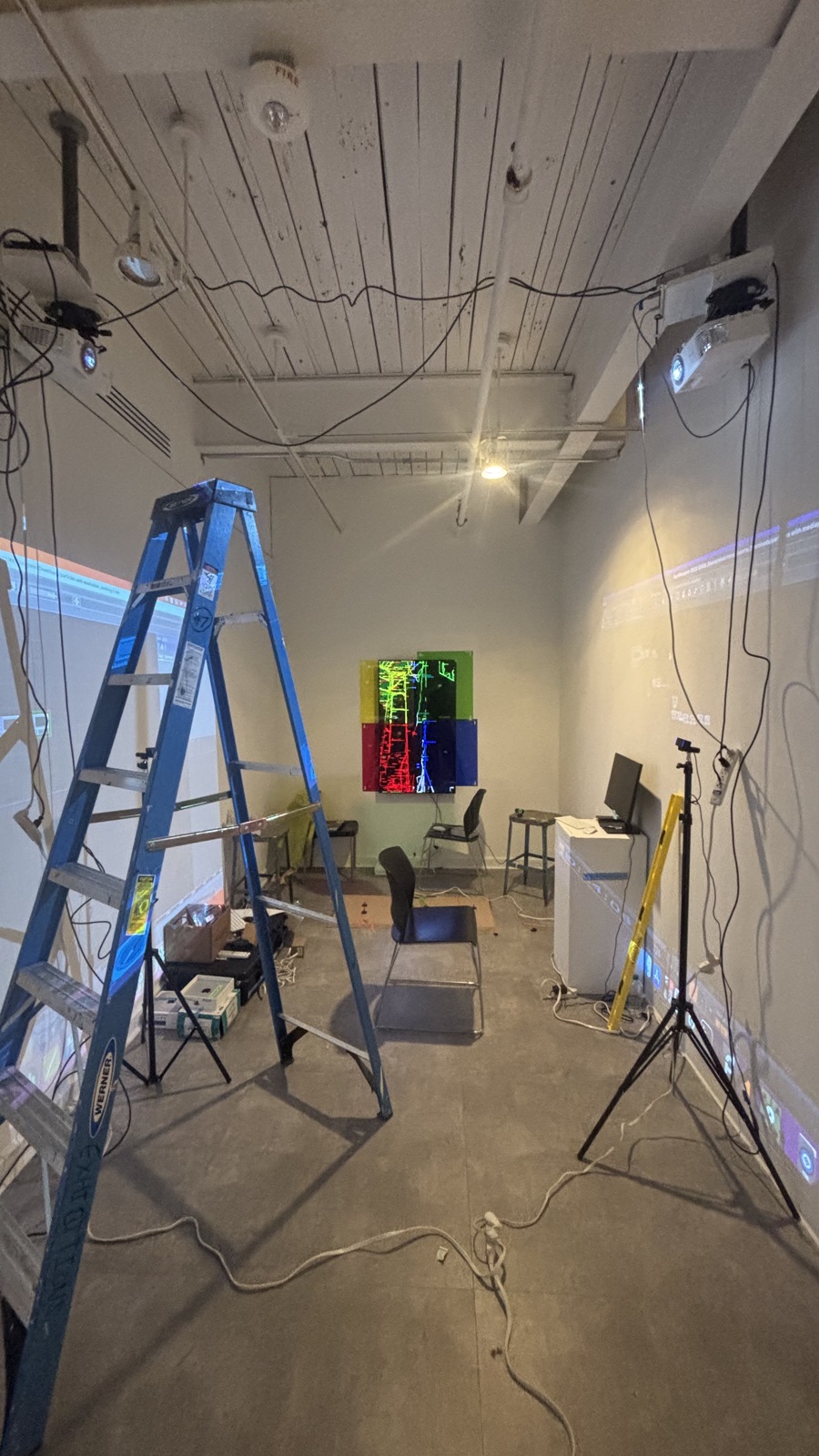
the space
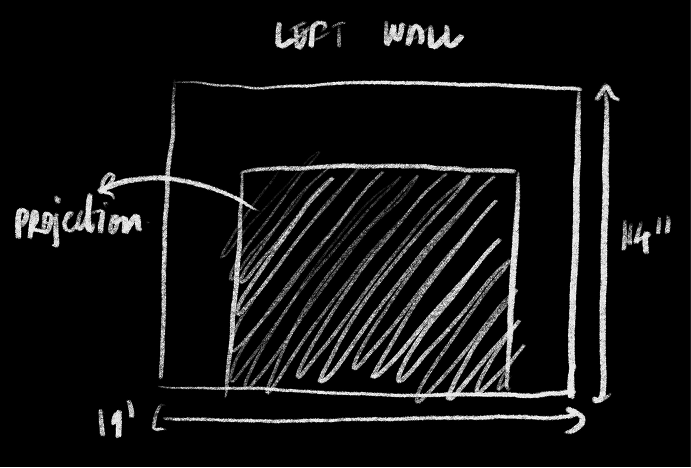
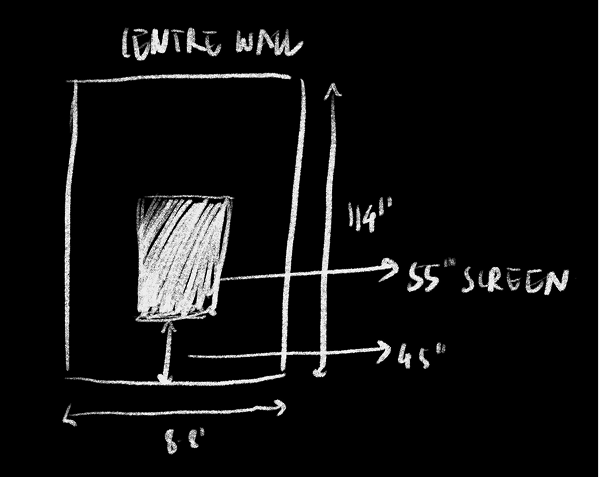
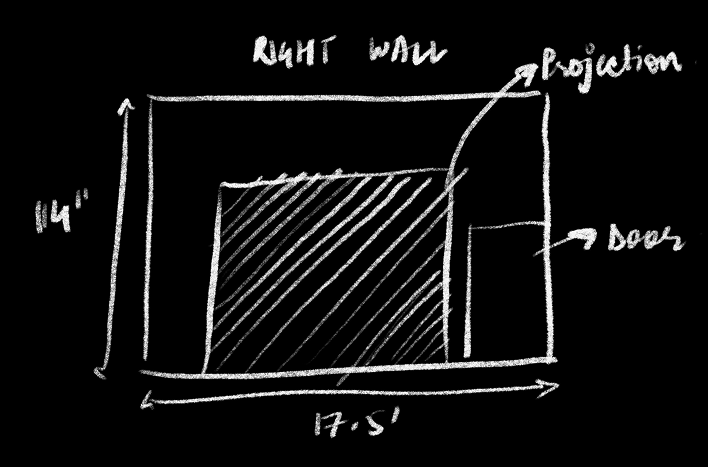
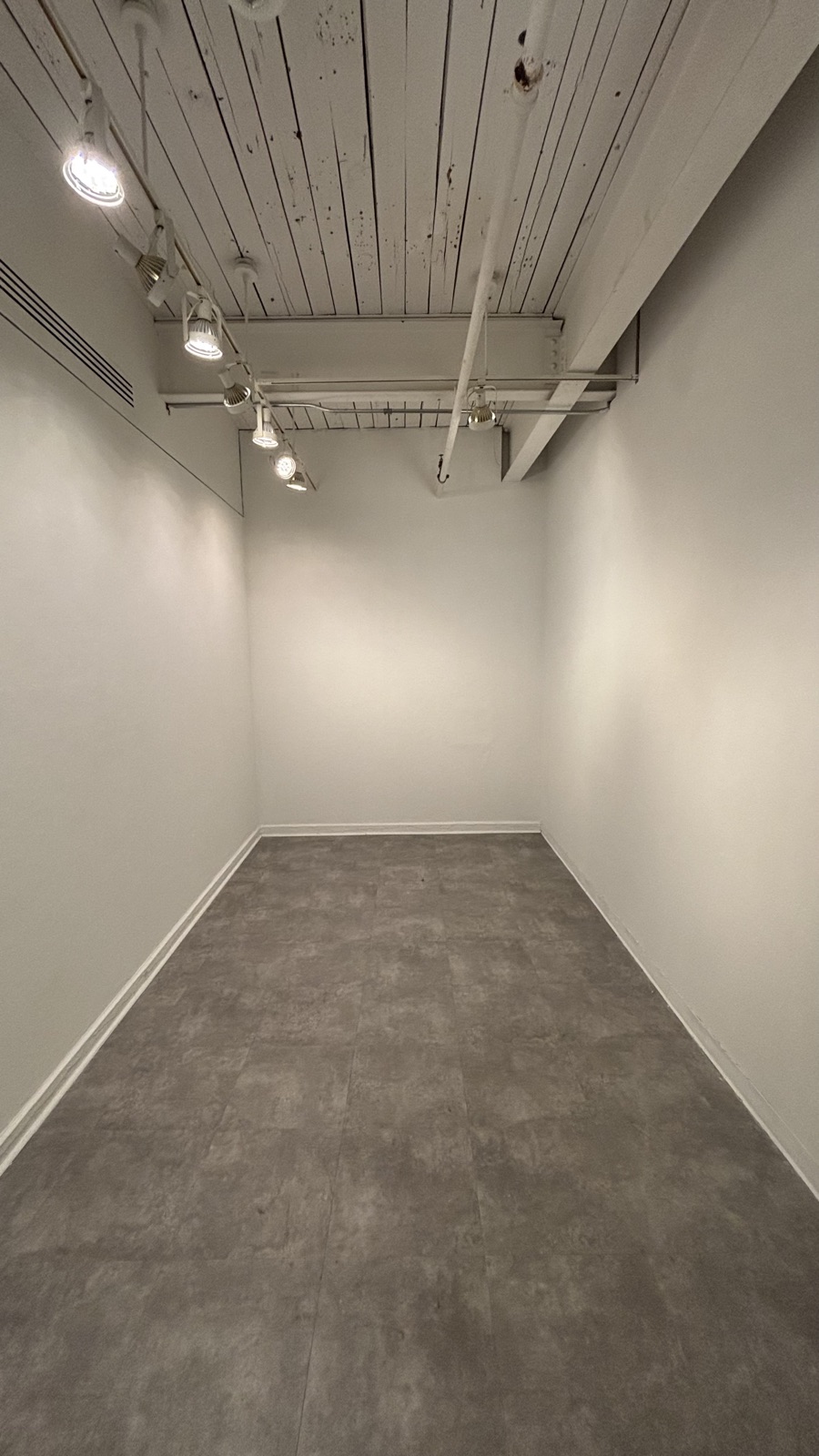
Once I saw the gallery, I started planning how the experience would unfold. I wanted a central focal point at the far end of the room with body-tracking projections on both side walls. Visitors would be surrounded by responsive imagery as they moved toward the centerpiece.
I talked with my advisors about what equipment was available on campus, calculated projection sizes based on throw distances, and figured out camera placements. The technical setup started to take shape: cameras at eye level, projectors mounted to the ceiling on opposite walls.
wall projections
left wall
A camera tracked visitors entering the space. Their silhouettes appeared on the wall, rendered as clouds of glowing white particles that followed their every move.
right wall
The opposite wall mirrored the experience. Another camera, another particle silhouette. Visitors found themselves surrounded by ghostly digital echoes as they moved through the room.
centrepiece
I used p5.js to experiment with different face filters, and an RGB visual style started to emerge that I was drawn to. But I was struggling to find something that would tie the physical and digital elements together.
After experimenting with a gazillion text options and sentences, I found "You are your choices" to be the most true to what I wanted my piece to say. For me this sentence embodied everything I wanted to communicate to the viewer. I feel that this is the crux of human identity and in the end we are not bound by anything except what we want ourselves to be. Our choices shape what we are and its only in retrospect that we can see how they've defined us.
My advisor suggested colored acrylic sheets. Panels that block certain light wavelengths and filter what you see. The idea clicked immediately. To get the full picture, viewers would have to look through these colored windows. It worked both ways: practically, the acrylics filtered the RGB display. Conceptually, you need to look through different lenses to see the whole truth.
setting it up
Turning all of this into a physical installation meant figuring out things I had never done before. Mounting projectors to ceilings, hanging acrylic in mid-air, getting cameras and code to work together in real time. I had a tight window to get everything installed, so I broke it down into phases.
personal
reflections
Having always designed on a screen, it was wild to see my work come alive in something bigger than a 32 inch monitor. I was overwhelmed with emotions when I saw people coming in and playing with the camera projections. People dancing, kids trying to touch their projections on the wall, one person crying. Seeing people react the way they did was eye-opening. It made me feel I could do so much more with the skills I have. It made me realise that design and art have the power to pull people out of their lives and mental state. If I could create work that makes people pause from their day to day lives and have a moment to themselves, that would be a great goal to accomplish.
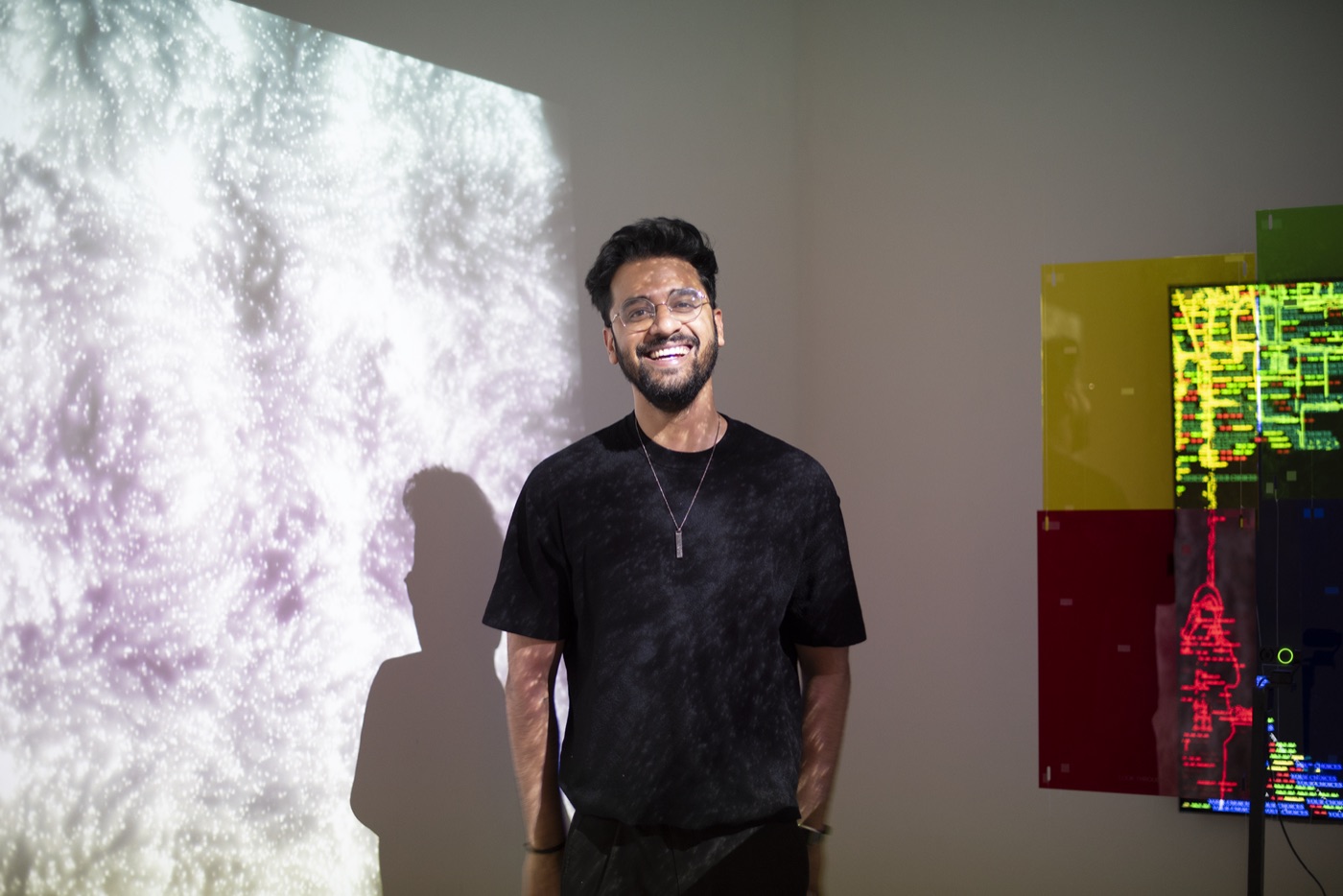
credits
Nothing worth accomplishing is accomplished alone. This installation would never have been possible if I wasn't surrounded with love from the best and most talented people around me.
Thanks to Daniel Gratham for walking me through the intricacies of immersive installation. Thanks to Jason Gotleb for the creative inputs that helped me believe in my exhibition. Thanks to Nic Amsel for helping with the physical setup.
Thanks to my instructors, Maureen Weiss and Haylein Choi, for being patient and kind. Their softness and belief kept me going.
Thanks to Taro & Yoora for being my home away from home.
Thanks to my amazing classmates for believing in me more than I do in myself: Anita, Divya, Shadi, Juemin, Chris, Rithik, Annie, Arya, Fahmida, Ben, Anna, Nina, Caitlin, Abby, Ruiheng.
And to my best friends from back home, Shrishti, Dharam and Nandini, for accepting me as who I am and loving me unconditionally.